
FABB Autumn Trade Fair Tour 2026
Between September and November, we’ll be attending seven trade fairs across six countries. We’re not taking the same presentation and repeating it seven times — and in this article, we explain why.
The simplest way to approach an autumn trade fair tour would be to prepare one set of hangers, one message, and repeat it in every city. It works, it’s cost-effective, and no one would object.
We decided not to do that, because the questions we hear at these seven fairs differ far more than the fabrics we could bring with us.
The term “furniture market” stops being useful the moment you sit down at the table with a specific person. A Swedish retail buyer, a Romanian export manufacturer, a German chain-store buyer, and a textile importer in Guangzhou all look at the same material from four different perspectives. Each perspective is equally valid — and each leads to a different decision.
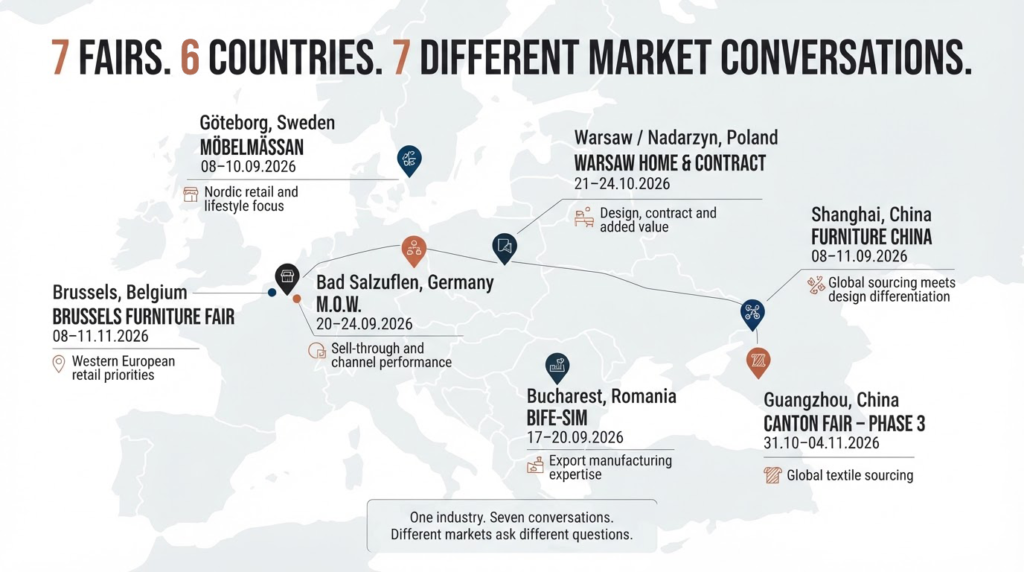
Below is the tour calendar and what we believe each of these markets will be talking about.
Autumn Trade Fair Calendar
Gothenburg: This Is Where Business Gets Done
Möbelmässan is primarily a buying event. According to the organiser, 80% of visitors either make purchasing decisions or have a direct influence on them, while a significant share of buyers finalise orders on site. The audience is distinctly Nordic: 82% of visitors come from Sweden, 8% from Norway, and 3% each from Denmark and Finland.
This changes the nature of the conversation. It doesn’t start with what looks interesting, but with what should make it into the range for the next season — and whether a new addition will work with the rest of the assortment.
There is another important signal from this year’s edition: Möbelmässan is expanding its collaboration with PUFF, bringing in around twenty additional exhibitors from the interiors, decoration and lifestyle sectors. Furniture is increasingly being evaluated as part of a broader interior concept rather than in isolation.For a fabric supplier, this means that a material needs to work within a wider interior story — not simply look good on a single piece of furniture.
That’s why in Gothenburg we want to talk about fabric in three roles: as a reliable base for a high-volume model, as a way to increase the perceived value of a piece, and as a distinctive accent that gives retailers a reason to put the furniture on display.
Shanghai: The Problem Isn’t a Lack of Choice
Furniture China operates on a scale that is a challenge in itself. At the previous edition, together with Maison Shanghai, the fairs covered 350,000 m² and brought together more than 3,200 exhibitors. Furniture China alone recorded 163,527 visits from attendees representing 174 countries and regions, including 32,618 international visitors — an increase of 13.9% year on year.
With such a high concentration of products and suppliers, saying “we have a new fabric” is not much of an argument. A manufacturer developing another sofa for export has different questions: Will the material give the product a distinctive identity? Can a coherent colour palette be built around it? Do its technical parameters match the intended application? And what role should the collection play within the overall product range?
One of Furniture China’s key strengths is that it brings finished furniture together with the upstream side of the industry — materials, raw materials and production technologies. It’s a good place to stop treating fabric selection as the final step in product development and start using it earlier, as part of the product positioning process.
Bucharest: One Sofa, Several Markets
At BIFE-SIM, a conversation about fabric is, in practice, a conversation about exports. The Romanian furniture industry exports 83.3% of its production and reaches 120 countries. This completely changes the way materials are selected: a fabric does not need to work for a single showroom in Bucharest, but for a collection sold across several markets at the same time.
In this context, the question “what colour is trending?” is simply too narrow. What matters more is the ability to build a coherent palette for several countries at once, match technical parameters to a specific application, ensure consistent results in serial production, and define a clear place for the material within the collection’s price architecture.
The production-oriented nature of this market is also reflected in the fair itself. The 2026 edition expands across two halls: B2 will host furniture, design, decoration and wood products, while B1 will focus on technologies, machinery and innovations for woodworking.
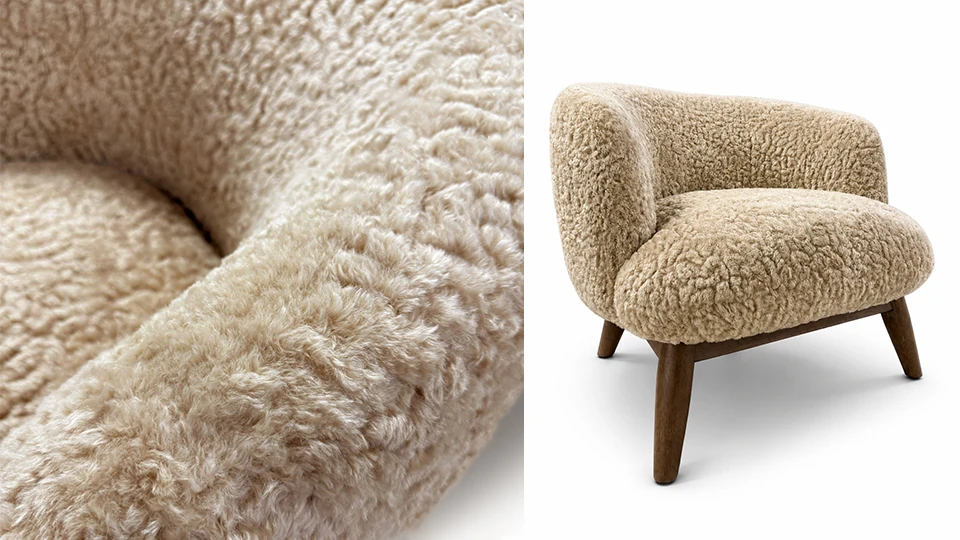
Bad Salzuflen: „Business statt Sourcing”
This year, M.O.W. has a particularly fitting motto: “Business statt Sourcing” — business instead of sourcing — which captures what the German market needs right now.
The market environment is challenging. In 2024, revenues in the German furniture industry fell by 7.4% to €16.4 billion. Domestic sales declined by 6.8%, while exports dropped by 8.6%. Under this kind of pressure, a buyer does not need another attractive fabric sample. They need a clear reason why a particular model deserves a place in the range — and how to reduce the risk behind that decision.
M.O.W. is well suited to this kind of conversation, as it covers all price segments and sales channels — brick-and-mortar, online and multichannel. Seventeen halls, 85,000 m², exhibitors from more than forty countries and trade visitors from over sixty. Admission is exclusively for industry professionals.
The same fabric can be evaluated very differently here depending on whether it is intended for a high-volume model, to increase the perceived value of an existing piece, or to create a clear step-up within the collection. That’s why, at our stand, we want to keep the conversation in this order: first the sales channel and the role of the model, then the surface, colour, texture and technical parameters.
fabb na M.O.W. 2026: Hall 21, Stand 3.
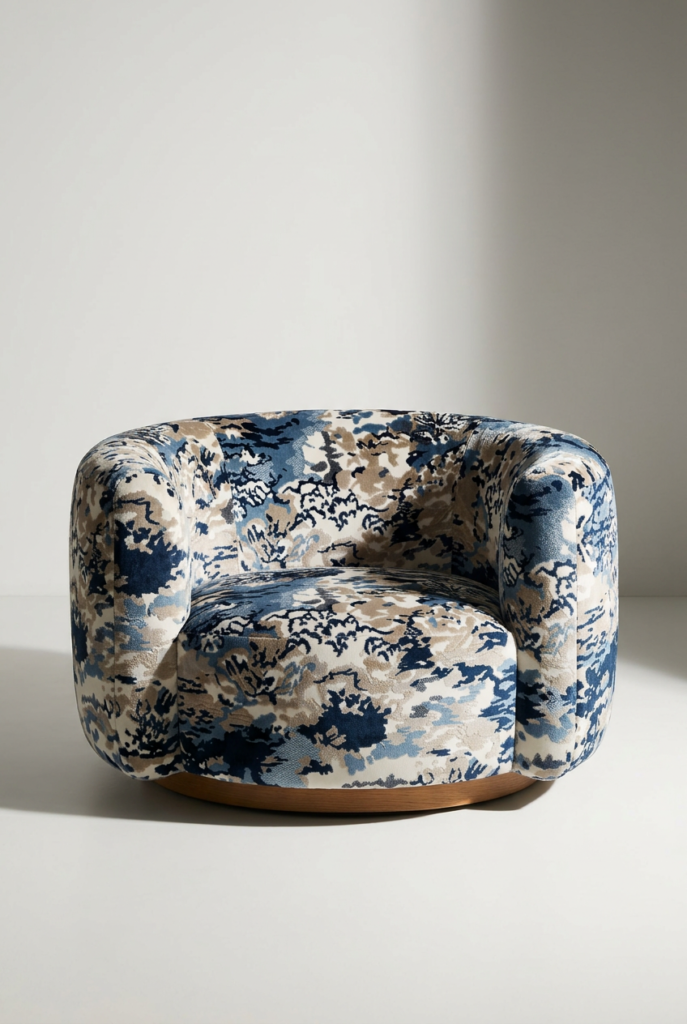
Warsaw: The Scale Is Already There — Now It’s About Value
Poland has no problem producing furniture at scale. It is the world’s fourth-largest furniture exporter, with exports worth €13.6 billion in 2024.
That is why at Warsaw Home & Contract, we are interested in a different question: where can manufacturers still add value instead of competing solely on production efficiency?
Fabric is one of the fastest ways to change how an existing furniture form is perceived. The same armchair can enter the range as a safe core model or as a strong statement piece for display — without any change to its construction. In contract projects, specification adds another layer: intended use, technical requirements, cleaning and maintenance, expected intensity of use and, where required, fire-safety standards.
Warsaw brings these two worlds together particularly well. The previous edition attracted 67,322 professionals from 43 countries and 763 exhibitors across 125,000 m², with the Furniture, Textile and Contract sectors running in parallel. The 2026 programme also includes the Design Decade Summit, aimed, among others, at architects, designers and design studios. So this is not simply a manufacturer–supplier conversation; the people responsible for specifying and delivering projects are also at the table.
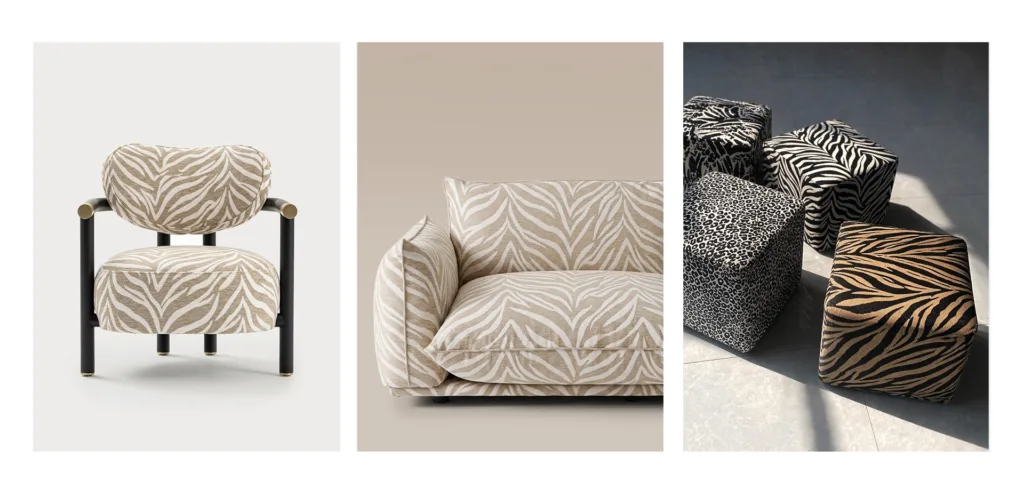
Guangzhou: to nie są targi meblowe
The Canton Fair requires a different kind of preparation from every other stop on this tour, and there is no point pretending otherwise.
In Phase 3, you are not surrounded solely by finished sofas. It is a global import–export platform where Home Textiles and Textile Raw Materials & Fabrics are just part of an enormous product offering; the official upholstery category includes, among other things, furniture cloth and sofa covers. The scale is well illustrated by the 139th Spring edition in 2026, which attracted 310,000 overseas buyers from 223 countries and regions.
In an environment like this, the catalogue with the largest number of products does not win. Within a few minutes, a buyer needs to understand who the offer is for, how the collections differ from one another, and which ones are worth taking into a more detailed conversation. That is why in Guangzhou, we want to work with selection rather than volume.
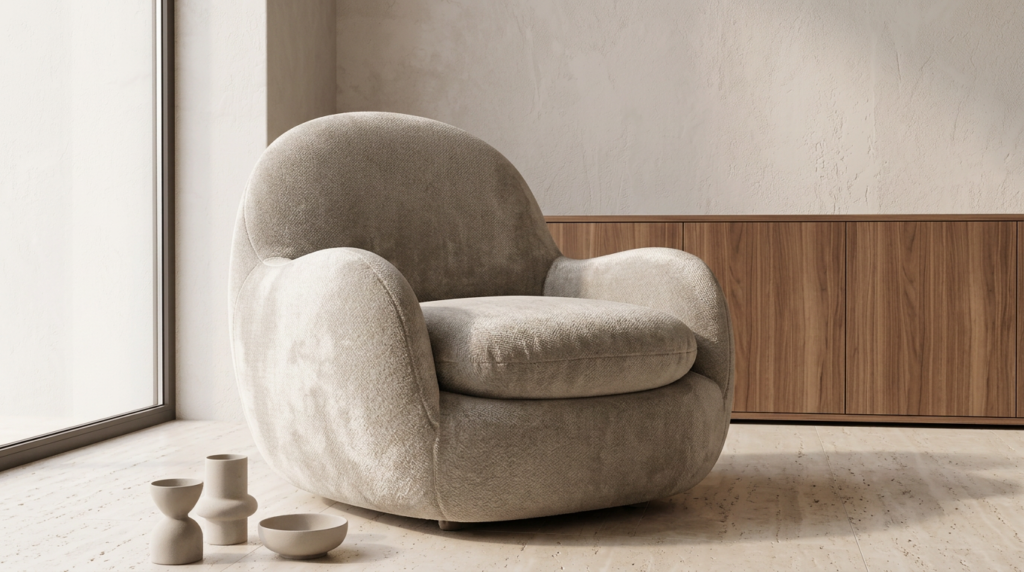
Brussels: Commercial Value on the Shop Floor
Brussels Furniture Fair explicitly talks about “commercial value on the shop floor” — and in 2026, this is more than just a slogan.
The Belgian furniture industry has now experienced its third consecutive year of declining turnover. In 2025, the market contracted by 3.9%, production volume fell by 2.4%, and exports declined by 5.5%. Around 90% of Belgian furniture exports go to the European Union, with Germany, France and the Netherlands as the three largest destinations.
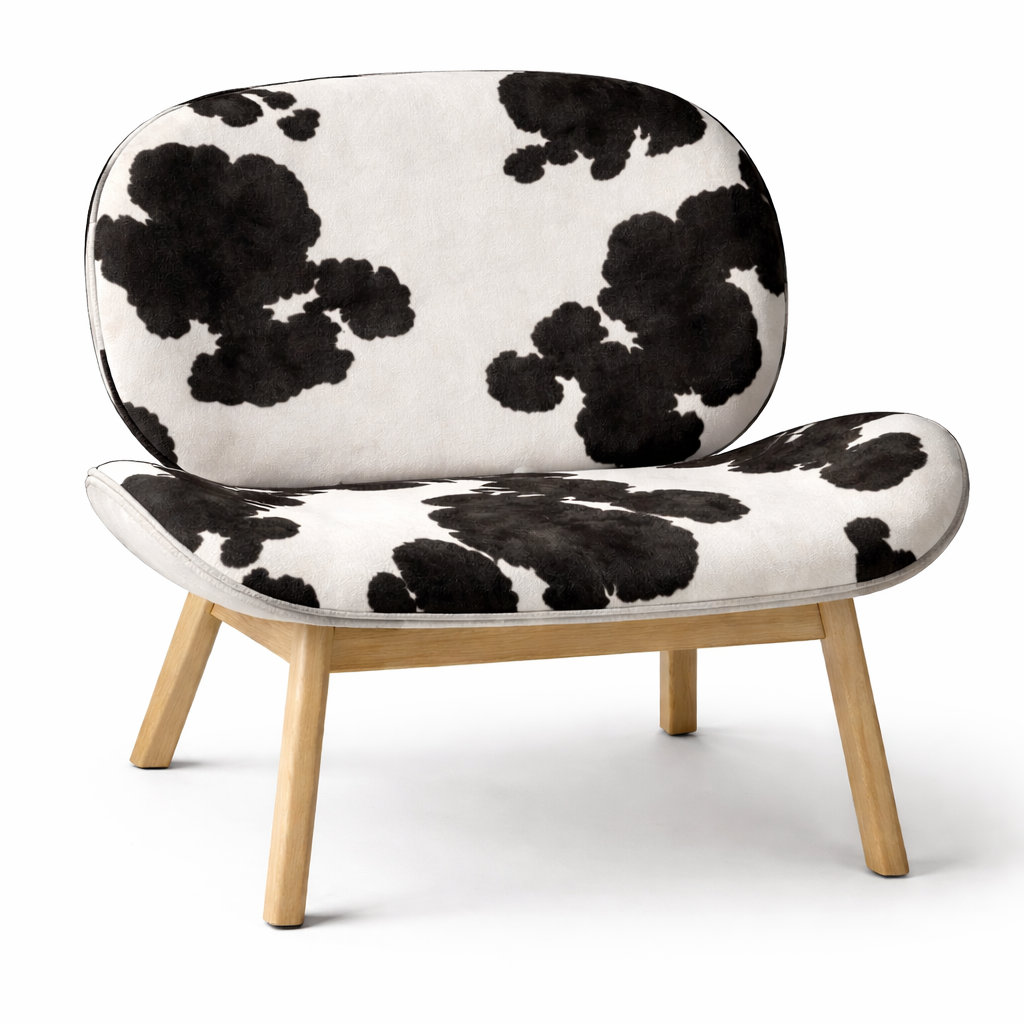
With demand becoming more cautious, buyers look at new products differently: the question is no longer whether a model looks good on presentation day, but whether it can actually sell.
The fair has been running since 1937, covers 66,000 m² and has a strong presence in the broad mid-market segment. It is an environment where the right fabric should help a retailer achieve one of three things: refresh an existing piece without a complete redesign, create a clear price step-up, or develop a model with a compelling reason to earn its place on the shop floor.
It is a fitting end to the tour, because this is where it becomes easiest to see whether the story behind a fabric translates into the language of retail: assortment, price architecture, ease of presentation and, ultimately, real sell-through.
What This Means for Preparing for a Meeting
There is one practical takeaway that applies to all seven cities. The question “What kind of fabrics are you looking for?” is usually too broad to produce a useful answer. A short brief about the product itself tells us far more.
Four pieces of information are enough to prepare for the conversation:
- What type of furniture are you developing — a sofa, armchair, bed, headboard, pet bed, outdoor furniture, or another piece?
- Which market and sales channel is it intended for — brick-and-mortar retail, e-commerce, chain stores, contract, or export?
- What role should the fabric play — a high-volume base, an upgrade to an existing model, a strong accent, or a specific functional purpose?
- Which requirements are non-negotiable — technical parameters, colour palette, intended use, or target price point?
Based on this, instead of starting with an entire wall of hangers, we begin with five to eight fabrics that are genuinely relevant to the project. Less random browsing, more decision-making — that is the real value of a trade fair meeting.
What This Article Doesn’t Cover
There are no autumn trend forecasts here. We are not going to claim in advance “what the market is saying at M.O.W.” or “which fabrics are the big hit in Shanghai,” because in August, no one can honestly know that yet.
All figures in this article come from publicly available data provided by the organisers, official statistics and industry reports.
We will publish observations from the fairs themselves only when the same signal emerges in at least three independent conversations. After the first half of the tour — Gothenburg, Shanghai, Bucharest and Bad Salzuflen — we will compare our notes. After Brussels, we will look at what was confirmed across markets and what turned out to be purely local.
Only then will those observations have real informational value. Anything else would simply be guesswork wrapped in an infographic.
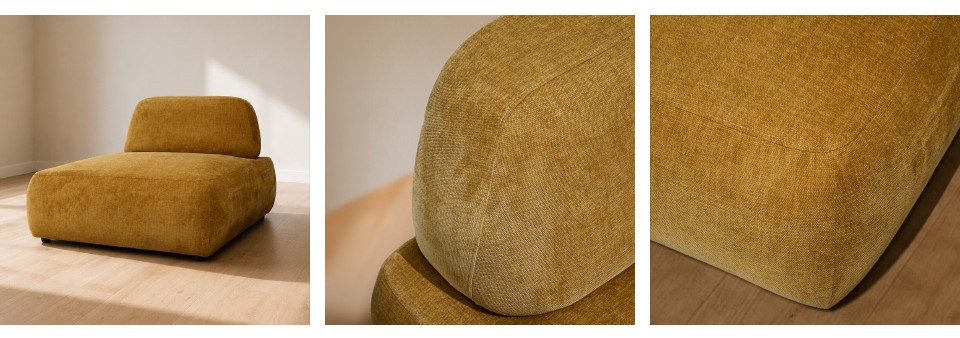
If you’re developing a new model or updating your collection for the 2027 season, get in touch before the meeting and tell us which market you’re working for. We won’t bring a random selection of samples – we’ll prepare a focused selection for your specific project.
See you there
FABB AUTUMN TRADE FAIR TOUR 2026
Göteborg · Shanghai · Bucharest · Bad Salzuflen · Warsaw · Guangzhou · Brussels
Meet the fabric behind your next bestseller.